


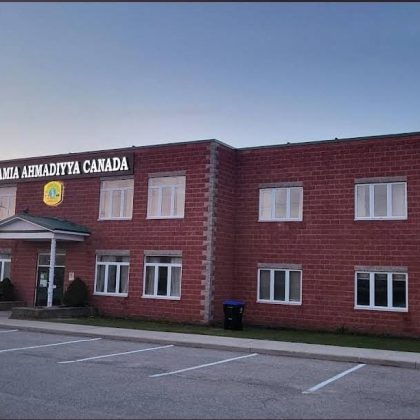
With great joy and gratitude, I welcome you to the Ahmadiyya Muslim Elementary School Barrie where the seeds of knowledge, faith, and service are sown and nurtured. Our school stands as a testament to the dedication and vision of our Jama’at to provide an environment where children can flourish academically, morally, and spiritually
At Ahmadiyya Muslim Elementary School, Barrie, we believe in the transformative power of education grounded in Islamic values. Our dedicated faculty and staff are committed to creating a supportive and stimulating environment where each child can reach their full potential. With a balanced curriculum that integrates academic excellence, religious education, and character development, we strive to nurture well-rounded individuals who are prepared to meet future challenges with confidence and integrity
As we embark on this exciting journey, I invite you to join us in creating a vibrant, inclusive, and nurturing community. Your support, involvement, and partnership are invaluable to the success of our students and the fulfillment of our school's mission. Thank you for choosing Ahmadiyya Muslim Elementary School. We look forward to working with you to build a brighter future for our children
At Ahmadiyya Muslim Elementary School, Barrie, we believe in the transformative power of education grounded in Islamic values. Our dedicated faculty and staff are committed to creating a supportive and stimulating environment where each child can reach their full potential. With a balanced curriculum that integrates academic excellence, religious education, and character development, we strive to nurture well-rounded individuals who are prepared to meet future challenges with confidence and integrity
As we embark on this exciting journey, I invite you to join us in creating a vibrant, inclusive, and nurturing community. Your support, involvement, and partnership are invaluable to the success of our students and the fulfillment of our school's mission. Thank you for choosing Ahmadiyya Muslim Elementary School. We look forward to working with you to build a brighter future for our children

Dr Ijaz A Rauf